
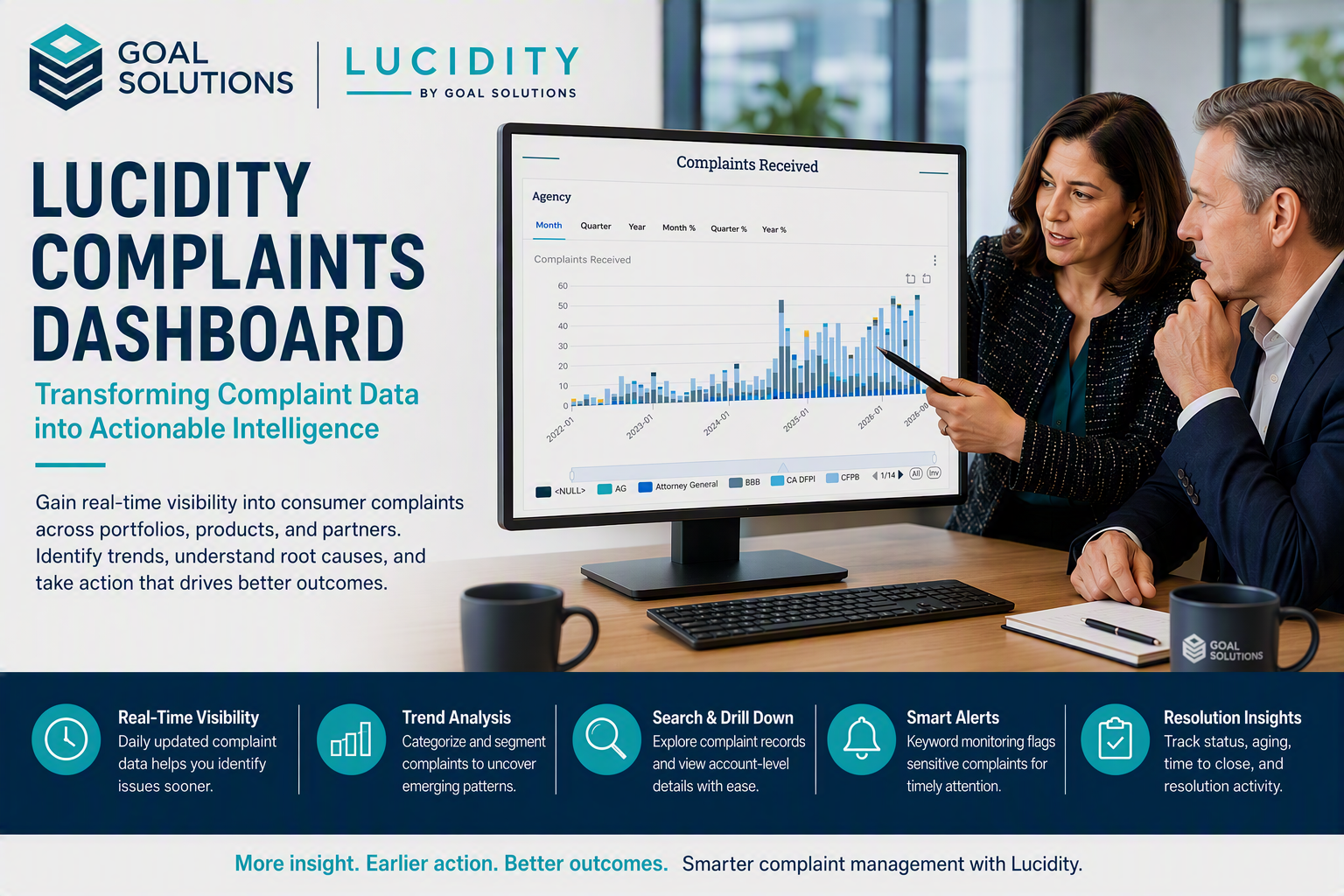
Consumer complaints can provide some of the most valuable operational intelligence available to lenders, investors, and portfolio managers. Although each complaint begins as an individual customer concern, collectively those interactions can reveal communication gaps, product delivery challenges, contractor or installer performance issues, sales process concerns, and other areas that may require attention. When identified and addressed proactively, complaints can help organizations improve customer satisfaction, strengthen portfolio performance, and reduce the risk of broader operational problems developing over time.
The Lucidity Complaints Dashboard helps clients move beyond simply documenting complaints. By bringing complaint activity, portfolio information, account-level detail, escalation indicators, and resolution data together in a centralized reporting environment, the dashboard provides a more complete understanding of what customers are experiencing and how concerns are being addressed.
Consumers often contact their servicer when something goes wrong, regardless of where the issue originated. Concerns may relate to a client’s product, the original sales process, an installer or contractor, a product supplier, or another third party involved in delivering the customer experience. As a result, complaint data can provide clients with valuable visibility into issues occurring throughout the broader customer journey and help identify trends that may require attention from contractors, installers, product providers, sales organizations, or other delivery partners.
Extending Visibility Beyond the Servicing Function
The customer experience often involves multiple organizations. Depending on the asset class or financing program, that may include a lender, originator, investor, merchant, contractor, supplier, installer, technology provider, or other product delivery partner. When customers encounter problems, the servicing organization is frequently one of the most accessible points of contact, even when the issue did not originate with servicing. A customer financing a solar installation may contact the servicer regarding project delays, equipment performance concerns, contractor responsiveness, or representations made during the sales process. A home improvement borrower may raise concerns about project completion, workmanship, product quality, or promotional financing terms. While these issues may ultimately require action by the client or one of the client’s partners, organizations still need visibility into the concerns being raised.
The Lucidity Complaints Dashboard helps bridge this information gap by connecting complaint narratives with relevant operational data, including asset class, lender, investor, complaint category, submission channel, escalation type, and resolution status. This broader perspective enables clients to better understand where issues may be originating and which stakeholders may need to be involved in resolving them. What initially appears to be a collection of isolated customer interactions may ultimately reveal recurring concerns associated with a specific contractor, vendor, product, process, or communication channel.
This visibility can be especially important in point-of-sale lending programs where customer satisfaction is closely connected to payment performance. Dissatisfied customers are more likely to become delinquent, while organizations that identify and address complaints quickly are often in a better position to maintain positive customer relationships and improve portfolio outcomes. In certain point-of-sale lending portfolios, customer complaints can have an outsized impact on payment performance. Some portfolios have experienced a significant percentage of late-stage delinquencies associated with unresolved customer complaints, making early awareness and proactive intervention particularly valuable.
A Centralized View from Portfolio Trends to Individual Complaint Detail
Complaint oversight can become challenging when information is spread across individual tickets, disconnected systems, spreadsheets, or periodic reports. Even when underlying records are available, identifying meaningful patterns often requires significant manual effort.
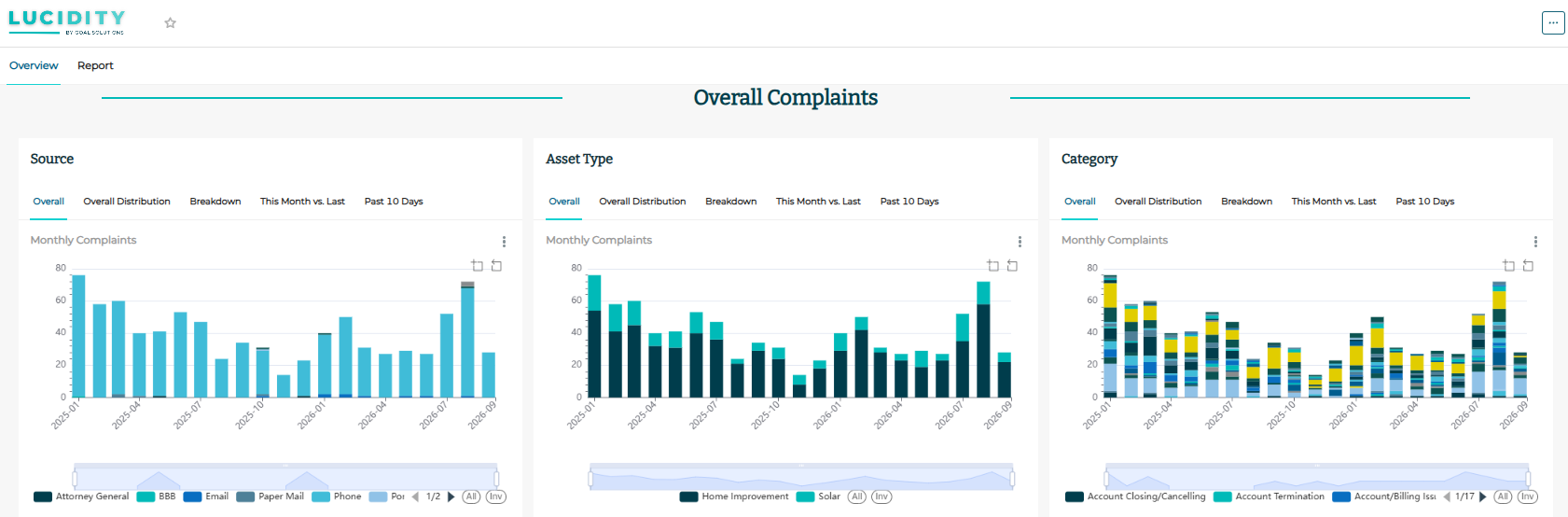
The Lucidity Complaints Dashboard consolidates complaint information into a centralized reporting environment where clients can review not only complaint activity across an entire portfolio, but also the individual records behind the data. Depending on the reporting configuration, users may have visibility into complaint categories, submission channels, asset classes, lender and investor relationships, escalation history, resolution activity, ticket status, and time-to-close metrics.
Client Perspective
“The Complaints Dashboard in Lucidity is a helpful resource for getting a quick view of complaint activity and the types of concerns being reported. I like having the information consolidated in one place, as it provides additional visibility into complaint trends and helps highlight areas that may need further attention. Overall, it’s a useful tool for supporting complaint monitoring and oversight.”
– Solar Finance Client
This combination of portfolio-level reporting and account-level detail allows clients to move seamlessly from identifying trends to understanding the specific circumstances behind them. Rather than relying solely on summary metrics, authorized users can review complaint narratives, investigate contributing factors, examine actions taken, and better understand how individual issues were resolved. By making both broad analysis and detailed investigation available within a single reporting experience, the dashboard helps clients prioritize follow-up efforts and make more informed operational decisions.
Supporting Earlier Detection of Emerging Issues
Complaint information is refreshed daily, providing clients with current insight into developing customer concerns. Instead of waiting for periodic summaries or manually compiling information from multiple sources, users can monitor newly opened complaints, unresolved issues, escalations, and other activity as it occurs.
The dashboard helps clients organize complaints into meaningful categories such as billing disputes, payment processing concerns, collection practices, customer service interactions, portal access issues, contractor performance, product delivery challenges, fraud concerns, refunds, fees, and servicing-related questions. Analyzing complaints by category allows organizations to identify recurring themes, investigate potential root causes, and determine whether corrective action may be warranted.
Early awareness can be especially valuable when several complaints involving similar issues emerge within a short period of time. What initially appears to be isolated customer feedback may indicate a broader operational concern requiring attention. By combining daily updates with categorized reporting, the dashboard helps clients recognize developing trends sooner and take a more proactive approach to oversight.
Adding Portfolio, Product, and Partner Context
One of the dashboard’s most valuable capabilities is its ability to connect complaint activity to the broader operating environment. Depending on available reporting fields, complaints can be analyzed in the context of portfolios, asset classes, lenders, investors, complaint categories, submission channels, escalation types, resolution outcomes, and other relevant attributes.
This additional context helps clients determine whether concerns are concentrated within specific loan programs, products, customer segments, contractor relationships, or third-party delivery partners. Rather than viewing complaints as isolated incidents, organizations can better understand where issues may be originating and direct investigation toward the areas most likely to require attention.
For example, recurring concerns tied to a particular contractor, product offering, or portfolio segment may suggest a very different response than complaints related to payment processing or customer communications. Connecting complaint activity to broader operational context helps clients focus resources where meaningful improvements may have the greatest impact.
Understanding the Full Complaint Lifecycle
Effective complaint oversight does not end when a complaint is received. The Lucidity Complaints Dashboard provides visibility into ticket status, resolution activity, escalation history, time-to-close metrics, closed notes, and whether concerns were resolved during the initial interaction. This information helps clients evaluate not only what customers are experiencing, but also how those concerns are being addressed.
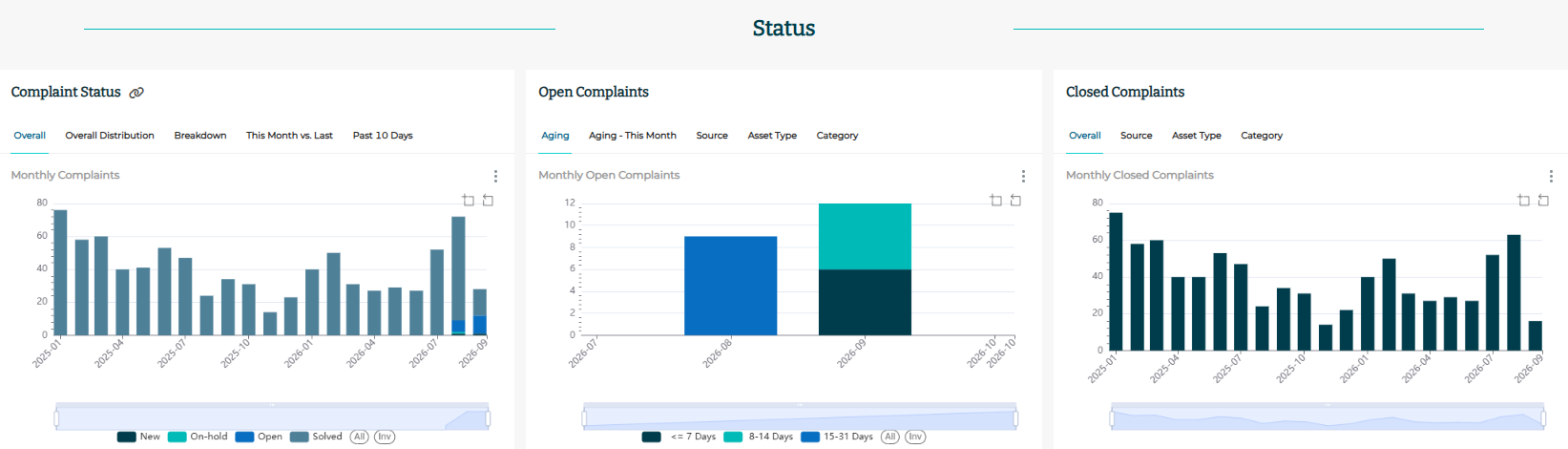
By reviewing complaint activity alongside resolution outcomes, organizations can better understand where processes are working effectively and where additional attention may be needed. Open complaints, recurring escalations, lengthy resolution times, or repeated issues within specific categories may reveal opportunities to improve workflows, customer communications, partner relationships, or operational procedures.
Client Perspective
“The Complaints Dashboard has been a valuable tool for our team by providing on-demand access to complaint data and reporting. Instead of waiting for scheduled file deliveries, we can quickly access updated information whenever needed, which has improved our ability to respond to requests and manage complaint activity efficiently.
We use the dashboard to investigate individual complaints, update our complaint tracking systems, identify trends and recurring themes, and support compliance oversight. The ability to access current data in one place has increased efficiency, improved visibility, and helped support coaching opportunities and operational improvements across our organization.”
– Consumer Finance Client
Enhanced Awareness of Sensitive Matters
Certain complaints warrant additional attention because of their subject matter or escalation potential. The dashboard supports configurable keyword monitoring for terms such as CFPB, BBB, Attorney, or Attorney General. When these terms are identified within complaint records, designated users can receive notifications that help bring potentially sensitive matters to their attention more quickly. Combined with priority indicators and escalation tracking, this additional capability helps organizations identify complaints that may require closer review and supports a more proactive response to potentially sensitive situations.
Turning Customer Feedback into Operational Improvement
The greatest value of complaint data often comes from what organizations learn over time. Borrowers contact servicers with concerns involving account management, payment processing, contractor interactions, product delivery, digital tools, financing terms, and many other aspects of the customer experience. When viewed collectively, these interactions can provide meaningful insight into areas where customer friction exists.
The Lucidity Complaints Dashboard helps clients connect customer feedback with the operational, portfolio, and partner information needed to understand those concerns more fully. By combining centralized reporting, daily updates, trend analysis, complaint categorization, account-level investigation, and resolution tracking, the dashboard provides a clearer understanding of what customers are experiencing and where attention may be needed.
These insights can support stronger customer communications, improved workflows, more effective coordination with contractors and delivery partners, enhanced oversight, and a better overall borrower experience. By helping clients identify recurring issues, engage dissatisfied customers, and address root causes involving contractors, installers, sales organizations, product providers, or other delivery partners, the dashboard supports a more proactive approach to complaint management. The result can be stronger customer relationships, improved operational performance, and greater visibility into factors that may ultimately affect delinquency and portfolio performance. Ultimately, the dashboard helps transform complaint activity from a compliance obligation into a source of actionable business intelligence.
Goal has consistently partnered with clients, offering expertise, guidance, and crucial services that lead to seamless and prosperous transactions. Specializing in ABS investor reports, financial statements, and associated reporting services, we are recognized leaders in the structured finance sector. Our comprehensive suite of solutions goes beyond standard reporting, encompassing vital services such as loan servicing, backup servicing, default prevention, collections, rating agency support, and master servicing. With a steadfast commitment to excellence, we facilitate a wide array of ABS transactions across diverse asset classes, ensuring our clients receive unparalleled support throughout their financial journey. Contact us to discover how we’ve enabled hundreds of clients to successfully tap into the securitization markets; we’ve proudly assisted in four inaugural client securitizations in 2024 alone. We’re eager to discuss your specific questions and objectives, and to tailor a solution that best meets your unique business requirements
To learn more about Goal Solutions and schedule an exploratory call, please visit: https://goalsolutions.com/ or contact:
Brian Cox
Vice President – Business Development
617-680-3515
[email protected]