
In structured finance, timely reporting is essential. Investors, issuers, warehouse lenders, and other transaction participants rely on monthly reports, financial statements, and compliance certificates to evaluate portfolio health and make informed decisions. However, reporting alone does not constitute portfolio management. By the time information appears in a monthly report, the events influencing portfolio performance have already occurred. Delinquencies have already increased. Concentrations may have already shifted. Covenant thresholds may already be approaching their limits. Market conditions may already be influencing borrower behavior. This is where portfolio surveillance plays a critical role.
Portfolio surveillance extends beyond the collection and presentation of data. It is the ongoing process of monitoring portfolio performance, identifying emerging risks, evaluating structural compliance, and providing stakeholders with visibility that supports proactive decision-making. As lending portfolios become more complex and investors demand greater transparency, portfolio surveillance has become one of the most important disciplines supporting successful structured finance programs.
What Is Portfolio Surveillance?
Portfolio surveillance is the continuous monitoring and analysis of loan portfolio performance throughout the life of an investment, financing facility, or securitization transaction.
The objective is not simply to understand what happened during the previous reporting period. The objective is to identify emerging trends, evaluate potential risks, and provide actionable intelligence that supports portfolio management decisions.
Effective surveillance combines multiple disciplines, including:
- Collateral performance monitoring
- Delinquency and default analysis
- Concentration limit testing
- Covenant compliance monitoring
- Trigger surveillance
- Reserve requirement monitoring
- Cash flow analysis
- Portfolio stratification
- Scenario analysis
- Investor reporting
Together, these activities provide a more comprehensive understanding of portfolio performance than any individual report can deliver.
Why Investors Need More Than Traditional Reporting
Historically, many investors received portfolio information through static monthly reporting packages. While monthly reporting remains important, modern structured finance transactions often require more dynamic oversight.
Today’s investors are evaluating portfolios across multiple asset classes, funding structures, and economic environments. They need visibility into developing trends long before those trends become material events.
For example:
- A gradual increase in delinquency rates may indicate future credit deterioration.
- Shifts in borrower concentration may affect portfolio diversification.
- Changes in prepayment behavior may influence cash flow projections.
- Deteriorating collateral performance may impact facility compliance or credit enhancement requirements.
These trends rarely emerge overnight. Portfolio surveillance helps stakeholders identify and understand these developments early, allowing them to evaluate potential responses before issues become operational challenges.
Collateral Surveillance Forms the Foundation
Every structured finance transaction ultimately depends on the performance of the underlying collateral. Whether the assets consist of consumer loans, home equity loans, student loans, solar receivables, home improvement financing, or other asset classes, understanding collateral performance is essential to protecting investor interests.
Collateral surveillance focuses on monitoring key performance indicators such as:
- Delinquencies
- Defaults
- Recoveries
- Prepayments
- Credit quality migration
- Portfolio concentrations
- Loan seasoning trends
The objective is not merely to collect data. It is to identify patterns that may influence future portfolio performance. Strong surveillance programs allow investors to move beyond historical reporting and develop a deeper understanding of the factors driving portfolio results.
Monitoring Covenants, Triggers, and Structural Requirements
Portfolio performance is only one component of transaction oversight. Many warehouse facilities, securitizations, and structured finance vehicles include operational and financial requirements designed to protect capital providers.
These may include:
- Performance triggers
- Reserve requirements
- Concentration limits
- Borrowing-base provisions
- Financial covenants
- Collateral eligibility requirements
Monitoring these requirements cannot be treated as a quarterly or monthly exercise. Effective surveillance programs continuously evaluate compliance and provide visibility into developing trends that could influence future performance. This proactive approach allows stakeholders to address risks early, communicate effectively with transaction participants, and maintain confidence in the integrity of the financing structure.
Turning Data into Actionable Intelligence
One of the most common challenges facing investors today is not the availability of data. It is the ability to transform large volumes of data into meaningful insights, and to do so in both a timely and efficient manner. Most portfolios generate vast quantities of operational information. Loan-level files, transaction data, servicing reports, trust account activity, and performance metrics all provide valuable information. Yet without a framework for analysis, important trends can remain hidden. Effective portfolio surveillance combines data management, validation, and analytics to convert raw information into actionable intelligence.
Rather than simply asking: “What happened?”
Stakeholders can begin asking:
- Why did performance change?
- What trends are emerging?
- What risks should be monitored?
- Are portfolio characteristics shifting?
- How might future performance evolve?
These questions are where surveillance delivers its greatest value.
Technology Has Become a Competitive Advantage
The increasing complexity of structured finance portfolios has made technology an essential component of effective surveillance. Manual processes often struggle to provide the visibility required to monitor large portfolios, multiple facilities, diverse asset classes, and evolving risk factors. Modern surveillance programs utilize advanced reporting platforms, automated data validation, portfolio analytics, and customizable dashboards to improve transparency and decision-making.
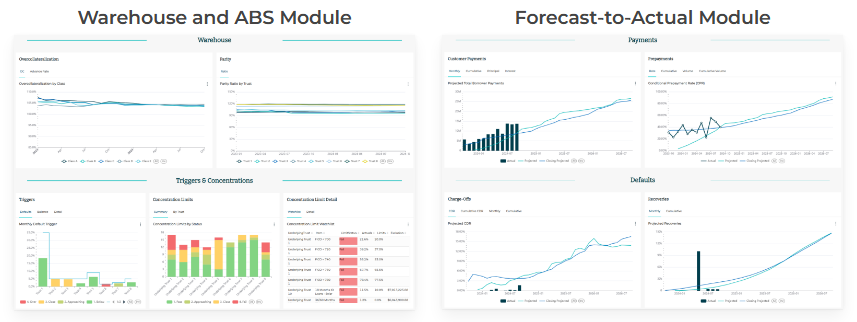
Goal Solutions supports clients through its proprietary Lucidity platform, which provides stakeholders with enhanced visibility into portfolio performance, risk metrics, reporting data, and transaction-level information. The platform helps transform large volumes of operational and financial data into actionable insights that support investment oversight and portfolio management decisions. By combining technology with experienced portfolio oversight, investors gain faster access to information while maintaining confidence in data quality and reporting integrity.
Portfolio Surveillance Is Ultimately About Better Outcomes
The most successful investors do not wait for problems to appear in month-end reports before taking action. They rely on disciplined surveillance programs that provide early visibility into portfolio performance, structural compliance, and emerging risks.
Effective portfolio surveillance supports:
- Stronger risk management
- Enhanced transparency
- Better capital allocation decisions
- Improved investor confidence
- More informed portfolio management
- Greater operational resilience
In an increasingly complex structured finance environment, portfolio surveillance has evolved from a reporting function into a strategic discipline that helps investors protect capital, improve oversight, and maximize long-term portfolio performance. For investors evaluating servicing, asset management, and structured finance partners, the question is no longer whether portfolio data is available. The more important question is whether that data is being transformed into meaningful intelligence that supports better decisions.
When surveillance is supported by experienced professionals, robust controls, advanced analytics, and transparent reporting, it becomes far more than a monitoring exercise. It becomes a competitive advantage.

Goal has consistently partnered with clients, offering expertise, guidance, and crucial services that lead to seamless and prosperous transactions. Specializing in ABS investor reports, financial statements, and associated reporting services, we are recognized leaders in the structured finance sector. Our comprehensive suite of solutions goes beyond standard reporting, encompassing vital services such as loan servicing, backup servicing, default prevention, collections, rating agency support, and master servicing. With a steadfast commitment to excellence, we facilitate a wide array of ABS transactions across diverse asset classes, ensuring our clients receive unparalleled support throughout their financial journey. Contact us to discover how we’ve enabled hundreds of clients to successfully tap into the securitization markets; we’ve proudly assisted in four inaugural client securitizations in 2024 alone. We’re eager to discuss your specific questions and objectives, and to tailor a solution that best meets your unique business requirements
To learn more about Goal Solutions and schedule an exploratory call, please visit: https://goalsolutions.com/ or contact:
Brian Cox
Vice President – Business Development
617-680-3515
[email protected]